
- News
- City News
- chennai News
- M Karunanidhi’s unwavering fight for a casteless society
Trending
This story is from August 9, 2018
M Karunanidhi’s unwavering fight for a casteless society
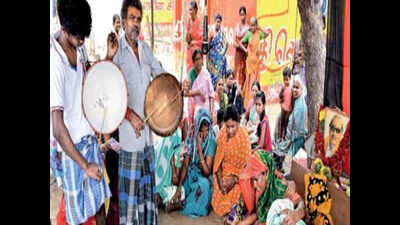
DMK followers mourn the demise of the M Karunanidhi on Wednesday
Marichamy was among the 206 people from various castes who were trained for priesthood in Shaivite and Vaishnavite temples in 2007-08. It is such stories that will continue to surface for decades as products of seeds sown by Karunanidhi through his social justice movement, which some saw as casteist, but in reality was aimed at eliminating the pernicious caste system.
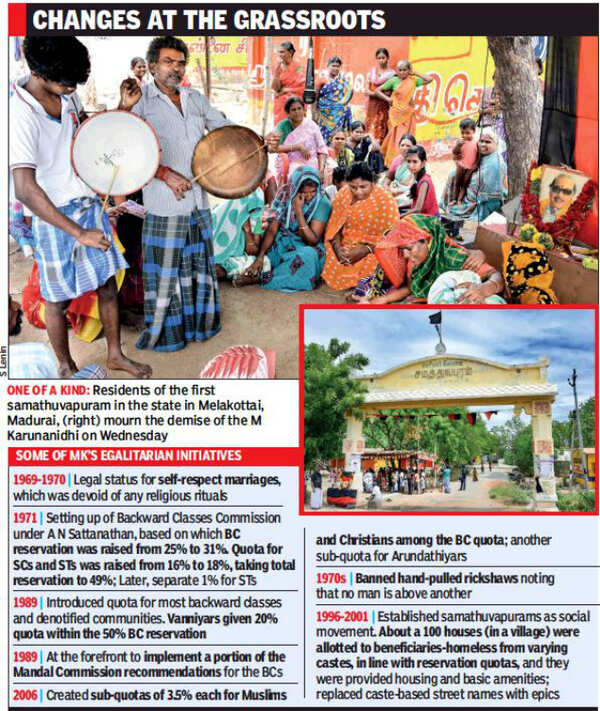
From abolition of hand-pulled rickshaws to the construction of slum tenements for Chennai’s economically weaker sections in the 1970s, Karunanidhi’s initiatives towards creating an inclusive society were apparent right from his first term as chief minister.
Though Kamaraj initiated reservation for the backward classes (BCs) through what was called the communal government order, it was Karunanidhi who was considered the champion of reservation for the BCs, the scheduled castes (SC) and the scheduled tribes (ST) after he became CM in 1969. Karunanidhi appointed A N Sattanathan as chairman of the Backward Classes Commission, on the basis of which reservation for BCs was increased from 25% to 31%, and hiked from 16% to 18% for SCs and STs, taking total reservation to 49%. He also did not approve of excluding the creamy layer or adopting an economic criterion while providing for reservations.
When the Vanniyar Sangam, the precursor to the Pattali Makkal Katchi, held agitations demanding separate reservation for the most backward castes (MBC), particularly Vanniyars, Karunanidhi in 1989 carved out a 20% quota for the MBCs and denotified communities within the 50% BC reservation. These efforts were part of his campaign for social justice, and to ameliorate the lot of the weaker and deprived sections, and not as an instrument to fan casteism. At the national level too he was at the forefront of the campaign for social justice, besides being instrumental in the implementation of the Mandal Commission recommendations.
Among his most definitive steps for people on the margins was the construction of Periyar Ninaivu Samathuvapuram (Periyar Memorial Equality Village) across Tamil Nadu. It was in tune with the DMK motto ‘Ezhaiyin Sirippil Iraivanai Kaanbom’ (We shall see God in the smile of the poor). The scheme provided for a housing complex where all communities could live without any discrimination. Karunanidhi thought of the scheme after caste clashes erupted between the thevars and dalits in the southern districts in 1997. Each equality village was to get 100 houses, subdivided into 40 houses for dalits, 25 for BCs, 25 for MBCs, and 10 for other communities. Though the scheme was given up in 2001 by the J Jayalalithaa government, it was revived by Karunanidhi in 2006.
Though Karunanidhi was seen to be running a campaign against brahmins, he maintained that he was against brahminism. His brahmin lawyers, auditors and doctors vouched that the DMK leader respected merit and talent. Karunanidhi always fought for a casteless society and did not hold any bias towards any caste or community.
End of Article
FOLLOW US ON SOCIAL MEDIA








Photostories

Hot Picks
TOP TRENDING
Explore Every Corner
Across The Globe
Banu MushtaqAmit ShahPAK vs BAN LiveIIT Madras Hyperloop Test TrackMatthew TkachukFortnite UpdatesNxt Champion GiuliaShakespeareWorld Largest ShipbuildersDonald TrumpCongo illnessCBSE Board exams 2026Rafael RizievBSEB Bihar Board Inter Result DatePAK vs BAN Live StreamingJordan Schultz vs IAN RapoportWorld Longest Hyperloop Test TrackKedar SelagamsettyNHL ScoreEpstein ListEsports Calendar 2025Infosys Trainee TerminationCBSE Date Sheet 2026Who is Jade Cargills HusbandBank HolidaysChampions Trophy Live Streaming in USAChampions Trophy Points TableBank Holidays in MarchChampions Trophy ScheduleICC Champions Trophy Live Streaming
Hot on the Web
Ranveer AllahbadiaIbuprofen GuideSikandar TeaserGovindaCelebrity MasterchefMere Husband Ki Biwi CollectionHimesh ReshammiyaRamadan 2025 DatePankaj ParasharRamadan 2025Tejasswi PrakashOptical illusionChhaava Box Office CollectionYuzvendra ChahalElon MuskNikki TamboliKing KobraKaroline LeavittAryan KhanWeight LossMasala Egg Chilla RecipeButtermilk BenefitsSadhguru QuotesButterflies QualitiesNew Animal SpeciesChhaava Movie ReviewAquatic AnimalsChild Growth HabitsSharara Set For RamadanY Letter Animals
Trending Topics
GATE 2025 Answer KeyKevin PietersenCam NewtonTaylor SwiftDonald TrumpVanessa BryantWho is Jade CargillChris WebberBrady TkachukNBA Buyout RumorsConnor McdavidAaron RodgerJohn BradshawSBI PO Admit CardCBSE Board Exam Date SheetPakistan Team Prize MoneyNyt StrandsNyt ConnectionsVille HussoKing Legacy CodesDa Hood CodesWordle HintsFacebook OutageSlack OutageChris WebberBill BelichickChampions Trophy 2025 Points TableNitish Kumar CabinetJujutsu Infinite CodesICC Champions Trophy 2025 Live Streaming
Popular Categories
HeadlinesSports NewsBusiness NewsIndia NewsWorld NewsBollywood NewsHealth+ TipsIndian TV ShowsTechnologyICC Champions TrophyIPLTravelEtimesHealth & FitnessHollywood NewsWeb SeriesWWEUS NewsNFLHow to watch IPL 2025How to watch IPL in CanadaHow to watch IPL in USACBSETechnology NewsInternational SportsAstrologyPublic HolidaysBank HolidaysIndia vs New ZealandWeather Today
Latest News
Luka Doncic's Hookah Habits and Diet Concerns Fueled the Rift That Led to the Dallas Mavericks' Shocking Trade to the Los Angeles LakersWhat Will John Cena Do After Leaving the WWE? Exploring Career Paths For The ChampFirst total lunar eclipse in 3 years promises mesmerizing rare blood moon; know when and where to watchTesla CEO Elon Musk gives ‘bankruptcy’ warning for CaliforniaElon Musk says he's getting 'death threats' due to…Twitter post that Elon Musk wrote and later deleted in response to petition demanding Canada to revoke his citizenshipMartin Nguyen Bids Farewell To MMA, Paves the Way for Future FightersIsrael releases 600 Palestinian prisoners in exchange for hostages, dozens still held in GazaInfluencers call these tests lifesaving. Are they?Are Justin and Hailey Bieber facing marital struggles? Friends say, ‘Enough is Enough’Is Uddhav's Sena cozying up to BJP as Shinde plays guessing game?NHL Score: Conor Garland’s second goal leads Vancouver Canucks to 3-2 victory over Los Angeles KingsEV startup Simple Energy raising Series A fundingInside the 2025 Oscars Gift Bag: Luxury retreats, designer beauty, and wildfire relief supportSamsung Galaxy M16 5G, Galaxy M06 5G with 50MP camera, 5000 mAh battery launched: Price, specs and moreTrump eyes Ukraine's mineral pie as Zelenskyy scrambles for support against Putin's invasionHavoc: Tom Hardy faces his past in intense teaser for his upcoming crime thrillerRain plays spoilsport in Rawalpindi; Pakistan and Bangladesh exit Champions Trophy winless
Copyright © 2025 Bennett, Coleman & Co. Ltd. All rights reserved. For reprint rights: Times Syndication Service